
Activated Carbon Filter Cotton Odor Removal Effect: Industrial VOC Filtration Guide
equipment ventilation, workshop purification and cabinet air exchange, most enterprises have long been plagued by core problems such as residual peculiar smells, drifting organic waste gas, formaldehyde odors, lampblack odors and excessive mixed dust odors. Many factory ventilation systems only adopt simple dust filtration without odor adsorption and purification, resulting in pungent workshop smells, odor nuisance from equipment exhaust, substandard air quality in factories and failure to pass EIA acceptance.
Most purchasers and engineering personnel have vague understanding of the deodorization performance of activated carbon filter cotton, and randomly select ordinary filter materials. This eventually triggers a series of operating pain points including incomplete deodorization, fast adsorption saturation, easy secondary desorption, filter element blockage by dust and frequent consumable replacement, which greatly increases enterprises’ operation and maintenance costs as well as environmental rectification pressure.
To thoroughly tackle industrial peculiar smells, waste gas and mixed odors, enterprises can rely on customized activated carbon filter cotton services provided by Zhongke Foam. Model selection shall be carried out based on material characteristics, adsorption principles and working condition adaptation logic. Only by selecting appropriate industrial purification consumables can long-term and stable deodorization be realized.
Core Types and Advantages of Activated Carbon Filter Cotton
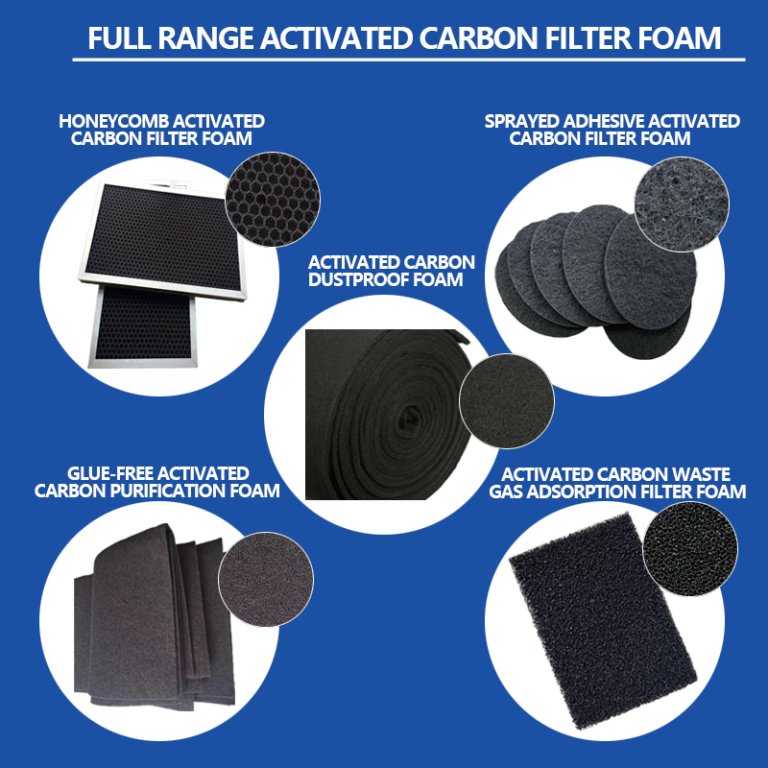
Honeycomb activated carbon filter cotton, glue-sprayed activated carbon filter cotton, glue-free activated carbon purification cotton, activated carbon dust-proof filter cotton and waste gas adsorption filter cotton are core functional consumables for industrial air purification and malodor & organic waste gas treatment. Different from ordinary needle-punched filter cotton, hot-air filter cotton, primary filter cotton, medium-efficiency filter cotton and non-woven filter cotton, this functional filter substrate is compounded and pressed with high-density activated carbon particles and activated carbon fiber as adsorption media together with high-strength breathable base materials. It features a huge specific surface area, dense microporous structure, large adsorption capacity and low air permeability resistance. Its activated carbon filter cotton odor removal effect far outperforms ordinary filter materials. Zhongke Foam supports customization of specifications and parameters as required. Finished products can targetedly adsorb formaldehyde, benzene series, TVOC organic waste gas, lampblack odor, plastic odor, paint smell, sulfide odor and various other harmful industrial odors. The substrate structure is not prone to bacterial growth, suitable for long-term continuous operation.
Why Industrial Deodorization Fails & Grade Differences of Carbon Filter Cotton
In actual industrial operation, improper material selection and mismatched parameters are the primary reasons for ineffective deodorization. Ordinary filter cotton can only intercept large-particle dust without the capacity to adsorb or decompose odor molecules. Low-quality activated carbon cotton with low gram weight contains a small amount of unevenly distributed activated carbon and sparse pores. It will reach adsorption saturation and lose efficacy in a short time, causing odor rebound and secondary pollution. In contrast, high-quality high-gram-weight activated carbon filter cotton, high-density activated carbon fiber cotton, washable activated carbon filter cotton and flame-retardant activated carbon filter cotton adopt an even carbon embedding process. The carbon layer is firmly attached without powder shedding, and the material maintains smooth air circulation without wind blockage. It can intercept dust impurities while realizing long-term adsorption of odor molecules, fitting all types of industrial purification scenarios with continuous operation. Zhongke Foam can customize the thickness, flame retardant grade and carbon content parameters of all the above materials on demand.
Industrial Application Scenarios of Activated Carbon Filter Cotton
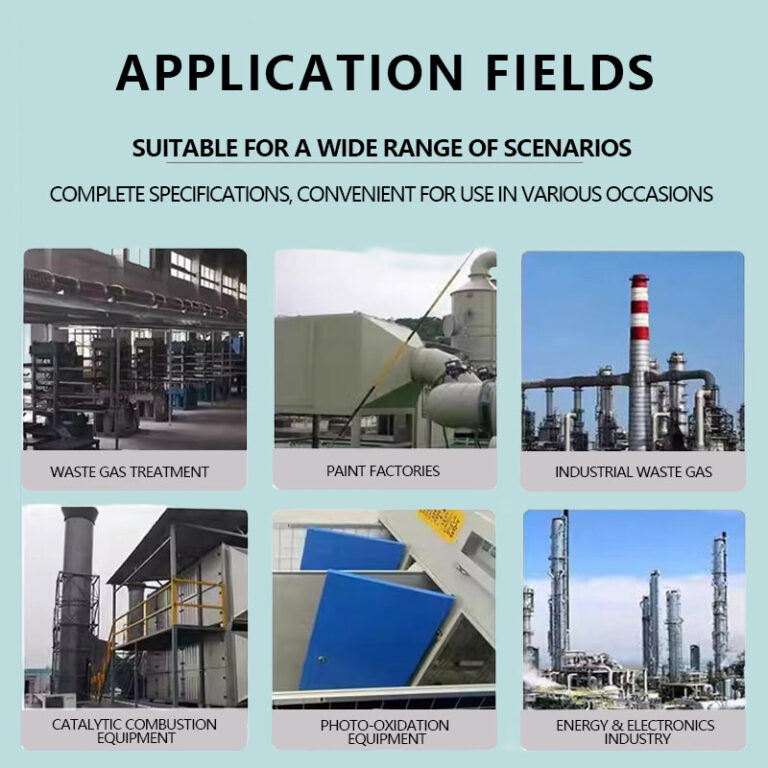
This series of purification materials is compatible with most industrial application scenarios, including workshop deodorization, waste gas purification for paint spray booths, deodorization of injection molding workshops, cabinet ventilation deodorization, fresh air equipment purification, odor treatment for dust removal equipment, waste gas adsorption on assembly lines, kitchen lampblack deodorization, laboratory waste gas filtration and odor control for printing factories.
Whether for air exchange in closed cabinets, pipeline exhaust purification or large-area workshop air deodorization, customized activated carbon filter cotton with matched thickness, gram weight and flame retardant grade from Zhongke Foam can achieve stable and standard-compliant purification. It effectively solves common industry troubles such as pungent workshop odors, odor complaints from exhaust emissions and excessive pollutants detected in environmental assessment.
Scientific Purification System Matching & Selection Guide
A complete industrial air purification system shall be configured following the hierarchical logic: front dust interception + middle adsorption + rear high-efficiency filtration. Equipped with primary non-woven fabric and medium-efficiency filter cotton at the front to intercept large-particle dust and prevent activated carbon micropores from being blocked by dust. The middle section adopts customized activated carbon filter cotton to absorb VOCs and odor molecules, and enterprises can choose standard finished products or contact manufacturers for parameter customization.
The rear section matches high-efficiency filter materials, glass fiber cotton and breathable dust-proof cotton for refined air interception, forming a progressive hierarchical purification structure. Scientific material combination can greatly extend the adsorption saturation cycle of activated carbon materials, reduce the replacement frequency of consumables, and optimize purification efficiency as well as operation and maintenance costs from the structural level.
Conclusion: Scientific Selection Ensures Long-Term Purification Compliance
Industrial malodor treatment cannot be achieved simply by thickening filter materials or increasing consumable dosage. The core lies in distinguishing performance gaps between ordinary filter substrates and functional activated carbon filter cotton. Parameters including gram weight, thickness and flame retardant grade shall be accurately matched according to on-site air volume, pollutant types, operating hours and environmental protection standards. Enterprises can build standardized hierarchical purification systems relying on the customization capability of Zhongke Foam, so as to permanently solve the problem of excessive workshop odors, organic waste gas and mixed dust smells. The solution balances ventilation resistance, purification performance and economic operation & maintenance, helping factories maintain qualified indoor air quality and smoothly pass EIA acceptance inspections.
FAQ About Activated Carbon Filter Cotton Odor Removal
Q1: Why do cheap activated carbon filters cause odor rebound?
A1: Low-cost cotton has low carbon loading and sparse micropores. It saturates quickly and releases trapped VOCs reversely. Industrial embedded-carbon filter cotton avoids desorption and maintains long-term stable activated carbon filter cotton odor removal effect.
Q2: Can activated carbon filter cotton block dust and remove odor simultaneously?
A2: Yes. Dual-purpose industrial carbon filter cotton uses a dense non-woven base for dust interception and a carbon layer for molecular adsorption, perfect for integrated ventilation and purification systems.
Q3: How to extend the service life of carbon filter cotton?
A3: Add primary pre-filter cotton at the air inlet to block large dust. This protects carbon micropores from clogging and extends the adsorption cycle by 2–3 times normally.
Q4: Is flame-retardant carbon filter mandatory for spray booths?
A4: Yes. Spray booths contain flammable paint mist and VOC vapor. Custom flame-retardant activated carbon filter cotton meets fire safety codes and EIA mandatory requirements.
Q5: How to choose filter thickness for different air volumes?
A5: Low-air-volume closed cabinets use 3–5mm thin carbon cotton; large-flow workshop ventilation adopts 10–20mm high-weight cotton for stronger VOC adsorption capacity.
Zhongke Foam Rubber Products Co., Ltd., Shunde District, Foshan City
Contact Hotline: +86 133 1833 8520 (WeChat Available) / 133 9277 3528 (WeChat Available)
Tel: 0757-26612516
Website: www.xcp181.com
Address: No.11 Cuizhu South Road, Hongqi Community, Ronggui Subdistrict, Shunde District, Foshan City, Guangdong Province, China